How Yoga and TCM Quietly Fixed My Body Over Time
Have you ever felt your body slowly falling apart—not from injury, but from daily stress, poor sleep, and burnout? I did. For years, I ignored the signals—stiffness, fatigue, tension—until I tried combining yoga meditation with traditional Chinese medicine (TCM) principles. This isn’t about quick fixes. It’s about long-term body repair, balance, and listening to what your body truly needs. Here’s how it changed me.
The Breaking Point: When My Body Said “Enough”
For over a decade, I lived what I thought was a balanced life. I ate mostly whole foods, walked regularly, and avoided smoking and excessive alcohol. Yet, by my early 40s, I was waking up with tight shoulders, a foggy mind, and a deep sense of exhaustion that no amount of coffee could fix. I wasn’t injured, nor was I diagnosed with any illness, but my body felt like it was running on empty. Simple tasks—carrying groceries, playing with my children, even standing for long periods—left me drained. Headaches crept in by mid-afternoon, and my sleep, though long in duration, lacked restorative quality. I would lie awake, mind racing, or wake up multiple times with a racing heart.
I visited doctors, hoping for answers. Blood tests came back normal. I was told I was “healthy for my age,” yet I didn’t feel healthy. I tried prescription sleep aids, which left me groggy. I increased my cardio workouts, thinking more movement would energize me, but instead, I felt more fatigued. Pain relievers helped temporarily with tension headaches, but the relief was short-lived. It became clear that Western medicine, while excellent for acute conditions, wasn’t addressing the slow erosion of my vitality. The treatments were symptom-focused, not root-cause oriented. I wasn’t broken in a way that required surgery or medication—I was depleted in a way that demanded a different kind of attention.
The turning point came during a routine visit to a physical therapist for persistent neck stiffness. After evaluating my posture and movement patterns, she didn’t suggest more stretching or exercises. Instead, she asked, “When was the last time you truly rested—not just slept, but rested your nervous system?” That question struck me. I realized I had spent years pushing through discomfort, ignoring tension, and treating my body like a machine that needed constant output. I had never learned how to truly restore. That moment opened the door to a new understanding: long-term body repair isn’t about doing more—it’s about creating the right internal conditions for healing to occur naturally.
What Is Body Repair—And Why It’s Not the Same as Recovery?
Many people use the terms “recovery” and “body repair” interchangeably, but they represent different processes. Recovery typically refers to the short-term healing that follows exertion—like resting after a workout, sleeping off a cold, or icing an injury. It’s reactive and time-limited. Body repair, on the other hand, is a deeper, ongoing process of restoring balance at the cellular, hormonal, and energetic levels. It’s not just about bouncing back—it’s about rebuilding resilience so the body can maintain equilibrium despite daily stressors.
Chronic stress, poor sleep, emotional strain, and environmental toxins can all disrupt the body’s ability to self-repair. Over time, these imbalances accumulate, leading to what many experience as “aging faster” or “just not feeling like myself.” In Western medicine, this is often labeled as fatigue, fibromyalgia, or burnout. But in holistic systems like traditional Chinese medicine, these symptoms are seen as early signs of systemic disharmony—clues that the body’s natural repair mechanisms are overwhelmed.
In TCM, the body is viewed as an intelligent, self-regulating system that repairs itself when the conditions are right. Key among these is the free flow of Qi (vital energy) through meridians, or energy pathways. When Qi becomes stagnant—due to emotional stress, poor diet, or lack of movement—the body’s ability to heal diminishes. Similarly, imbalances in Yin and Yang—such as too much internal heat (Yang excess) or insufficient nourishment (Yin deficiency)—can impair tissue regeneration and immune function. Body repair, then, isn’t about forcing healing but about removing obstacles so the body can do what it’s designed to do: restore, renew, and rebalance.
This shift in perspective was crucial for me. I stopped asking, “What can I do to fix this symptom?” and started asking, “What conditions does my body need to heal itself?” The answer wasn’t another pill or intense workout—it was stillness, awareness, and consistency in practices that supported my body’s innate wisdom.
Yoga Meditation: More Than Just Stretching and Breathing
When I first tried yoga, I thought it was just another form of exercise—gentle stretching with some breathing mixed in. I couldn’t have been more wrong. Over time, I came to understand that yoga meditation is a powerful tool for nervous system regulation, one of the most critical components of long-term body repair. The practice doesn’t just affect muscles and joints; it influences the autonomic nervous system, shifting the body from a state of constant alert (sympathetic dominance) to one of rest and restoration (parasympathetic activation).
Through consistent practice, I began to notice changes that went far beyond flexibility. My resting heart rate slowed. My breath became deeper and more rhythmic, even during stressful moments. The chronic tightness in my shoulders and lower back began to soften, not because I was stretching harder, but because my nervous system was no longer holding tension as a default. Research supports this: studies have shown that regular yoga practice can reduce levels of cortisol, the primary stress hormone, while increasing GABA, a neurotransmitter associated with calm and relaxation. This hormonal shift creates a biochemical environment conducive to healing.
Another profound benefit was increased body awareness. In yoga meditation, the focus is not on achieving perfect poses but on observing sensations, breath, and mental patterns without judgment. This mindfulness helped me recognize early signs of tension—like clenching my jaw or holding my breath—before they turned into full-body stiffness. Over months, this awareness translated into better posture, more efficient movement, and even improved digestion, as I began to notice how stress affected my gut.
Yoga also supports physical repair through improved circulation and reduced inflammation. Gentle asanas (postures), especially in restorative and yin styles, encourage blood flow to deep tissues, delivering oxygen and nutrients while removing metabolic waste. The sustained holds in yin yoga, for example, apply mild stress to connective tissues, stimulating collagen production and enhancing joint health. Meanwhile, meditation has been linked to reduced markers of systemic inflammation, a key driver of chronic pain and degenerative conditions. Together, these effects create a foundation for the body to repair itself at a cellular level.
Traditional Chinese Medicine: The Missing Link in Modern Wellness
While yoga meditation addressed the nervous system and physical tension, I still struggled with fatigue and occasional digestive discomfort. That’s when I turned to traditional Chinese medicine, a system that has guided health and healing for thousands of years. Unlike symptom-based approaches, TCM looks at the body as an interconnected network of energy, organs, and functions. Its goal is not to suppress symptoms but to identify and correct underlying imbalances that, if left unaddressed, can lead to chronic issues.
At the heart of TCM is the concept of Qi, the vital energy that flows through the body along meridians. When Qi flows smoothly, the body functions optimally. When it becomes blocked or depleted, symptoms arise. Another core principle is the balance of Yin and Yang—Yin representing nourishment, rest, and substance, and Yang representing activity, warmth, and function. Health is not the absence of symptoms but the dynamic equilibrium between these forces.
One of the most illuminating diagnoses I received from a licensed TCM practitioner was Liver Qi stagnation. This pattern, common in modern life, occurs when emotional stress—especially repressed frustration or anger—disrupts the smooth flow of Qi. It manifests physically as tension in the neck and shoulders, digestive issues like bloating, menstrual discomfort, and a tendency toward irritability. Emotionally, it can lead to mood swings and difficulty relaxing. The treatment wasn’t about fixing the liver as an organ but about restoring the free flow of energy through lifestyle, diet, and gentle movement.
TCM also emphasizes the role of the Spleen and Stomach in energy production. In Western terms, this relates to digestion and nutrient absorption, but in TCM, the Spleen is responsible for transforming food into Qi and blood. When weakened by irregular eating, cold foods, or overthinking, it leads to fatigue, poor concentration, and loose stools. By adjusting my diet—eating warm, cooked meals at regular times and reducing raw, cold foods—I noticed a significant improvement in my energy levels and mental clarity. Acupuncture, herbal formulas, and self-massage along meridians further supported this process, helping to unblock stagnation and strengthen deficient areas.
How I Combined Both: A Natural System for Long-Term Healing
The real transformation began when I stopped treating yoga and TCM as separate practices and started integrating them into a cohesive daily rhythm. I didn’t adopt an extreme routine or spend hours each day on self-care. Instead, I focused on consistency and sustainability, building small, repeatable habits that supported my body’s natural repair cycles.
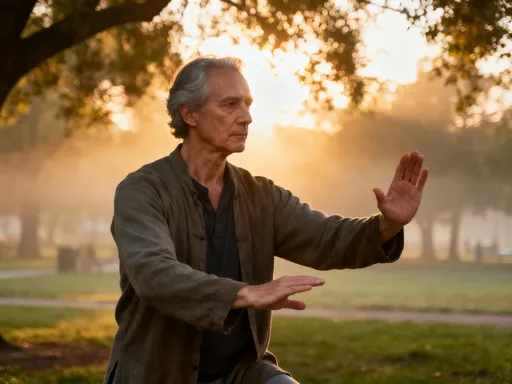
My mornings now begin with 15 to 20 minutes of gentle movement inspired by Qi-gong and tai chi—slow, flowing sequences that awaken the body and stimulate Qi flow. These movements are not strenuous; they’re designed to harmonize breath and motion, clear stagnation, and set a calm tone for the day. I follow this with a few minutes of seated breathwork, focusing on deep abdominal breathing to activate the parasympathetic nervous system.
In the evening, I practice yin yoga, a slower form that involves holding poses for 3 to 5 minutes. This targets the deeper connective tissues and meridians, promoting flexibility and energy flow. Combined with mindfulness, it becomes a form of moving meditation that helps me release the day’s tension. I also incorporate self-acupressure techniques, gently pressing key points like Liver 3 (between the big toe and second toe) to relieve stress and support Qi circulation.
Diet plays a central role in this system. Guided by TCM principles, I prioritize warm, nourishing foods—soups, stews, cooked vegetables, and whole grains—especially in the morning and evening. I avoid icy drinks and excessive raw salads, which are considered taxing to the Spleen’s digestive function. Meal timing is also important; I eat dinner early, allowing at least three hours before bed, which supports better sleep and overnight detoxification. Hydration is maintained with warm water or mild herbal teas, which are gentler on digestion than cold beverages.
What makes this system work is not intensity but regularity. I don’t practice every technique every day, but I ensure that some form of mindful movement, breathwork, or dietary awareness is present daily. Over time, these small actions have created a cumulative effect, like drops filling a bucket. The changes weren’t dramatic at first, but after several months, the difference became undeniable.
What Changed—And What Didn’t
The improvements I’ve experienced are both measurable and felt. My sleep, once fragmented and unrefreshing, is now deeper and more consistent. I fall asleep faster, wake less frequently, and wake up feeling genuinely rested. My energy levels have stabilized—I no longer experience the midday crashes that used to derail my productivity. The chronic stiffness in my neck and back has reduced significantly, and I move with greater ease, especially in the mornings.
Emotionally, I’ve become more resilient. While I still face stress, I no longer absorb it into my body as tension. I’m quicker to recognize when I’m becoming overwhelmed and can use breath or movement to reset. This emotional regulation has improved my relationships and overall sense of well-being. Even my skin and digestion have improved, reflecting the internal balance that’s been restored.
But not everything changed overnight. Deep-seated patterns—like my tendency to overcommit or ignore early warning signs—took months to shift. There were days I skipped practice, weeks when progress felt stalled, and moments of doubt when I questioned if this was working. Healing is not linear. Some symptoms, like occasional fatigue during seasonal changes, still appear, but they’re milder and resolve faster. The key difference is that I now have tools to respond, rather than react.
I’ve also learned the importance of self-compassion. Body repair isn’t about achieving perfection—it’s about showing up consistently, even imperfectly. There’s no shame in having off days. What matters is the overall direction: moving toward balance, not away from it. This mindset has been as healing as the practices themselves.
Why This Matters for You—And How to Start Safely
If you’re feeling worn down, tense, or disconnected from your body, know that you’re not alone—and you don’t have to wait for a crisis to begin healing. The combination of yoga meditation and traditional Chinese medicine offers a natural, sustainable path to long-term body repair. It’s not about dramatic overhauls or expensive treatments. It’s about creating the right conditions—through breath, movement, diet, and awareness—so your body can do what it’s designed to do: heal itself.
Starting doesn’t require hours of practice or a complete lifestyle change. Begin with just 10 minutes a day of breath-focused yoga—simple seated breathing or gentle stretches that bring your attention inward. Notice how your body feels without trying to change it. Observe your energy levels, your sleep quality, your emotional responses. These observations are the first step toward deeper awareness.
As you build this foundation, consider exploring TCM principles through trusted sources or consultations with licensed practitioners. Pay attention to how your body responds to different foods, temperatures, and routines. Small adjustments—like eating warm breakfasts, reducing screen time before bed, or taking short mindful breaks—can have outsized effects over time.
It’s also important to emphasize that while these practices are widely beneficial, they are not a substitute for professional medical care. If you have a diagnosed condition, are pregnant, or are managing chronic illness, always consult with your healthcare provider before beginning new routines. TCM and yoga are complementary systems, not replacements for necessary medical treatment.
True body repair isn’t about dramatic interventions—it’s about returning to balance through consistent, mindful practice. Blending yoga meditation with traditional Chinese medicine taught me to listen deeply, move gently, and trust the process. Your body wants to heal. Sometimes, it just needs the right conditions—and time.