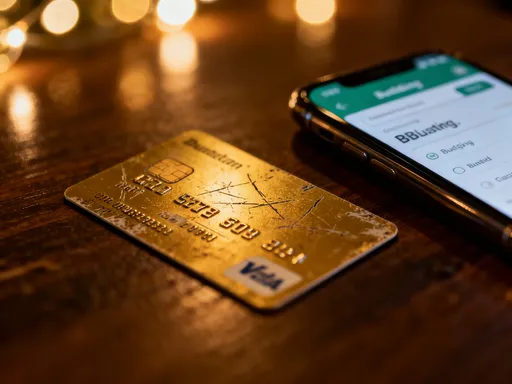
Why Are You Still Guessing Where Your Money Goes Each Month?
We’ve all been there—staring at our bank balance, wondering where the paycheck disappeared. You budgeted (sort of), skipped the daily latte (sometimes), yet somehow, money just slips away. What if your phone could quietly track every coffee, subscription, or impulse buy—without you lifting a finger? This isn’t about strict budgeting. It’s about clarity, control, and finally understanding your spending habits—so you can save smarter, live easier, and feel more at peace. It’s not about being perfect with money. It’s about being aware. And that small shift? That’s where everything changes.
The Silent Money Leak: When “Little Things” Add Up Faster Than You Think
Imagine this: you’re sitting at the kitchen table, bills in one hand, phone in the other, trying to make sense of your bank statement. You make a decent income. You don’t splurge on vacations or designer bags. Yet, by the third week of the month, you’re already checking if you can delay the grocery run. Where did it all go? You’re not alone. So many women I talk to—moms, professionals, homemakers—feel the same quiet frustration. It’s not that they’re careless. It’s that no one sees the slow drip of small expenses adding up like water from a leaky faucet.
Think about your last week. That $5 smoothie on the way to pick up the kids. The $12 app you downloaded because it promised to organize your pantry. The online sale you swore you’d only browse—then ended up with two sweaters and a candle you didn’t need. Individually, they feel harmless. But over time, these tiny leaks become a flood. And the worst part? You don’t even remember most of them. That’s the real problem—not overspending on big things, but being blind to the little ones.
I remember when I first realized this about myself. I thought I was being careful. I packed lunches. I used coupons. But I still felt broke by month’s end. Then one day, I opened my bank app and actually looked—really looked—at the last 30 days. And there it was: $80 on delivery apps. $36 on a subscription I didn’t even use anymore. $15 here, $10 there, all vanishing into the digital ether. It wasn’t one big mistake. It was dozens of small ones, stacking up like invisible bricks. The truth is, most of us aren’t bad with money. We’re just not aware. And awareness? That’s the first step toward change.
Meet Your Financial Mirror: How Spending Apps Learn Your Habits
Now, I know what you’re thinking: ‘Another app? Another thing to manage?’ But what if I told you there’s a tool that works for you—not the other way around? That’s exactly what modern spending apps are designed to do. They’re not like old-school budgeting software that made you manually enter every coffee and cringe at red numbers. These days, your phone can quietly watch your money, learn your rhythm, and reflect it back in a way that makes sense—without you doing anything extra.
Think of it like a mirror. You don’t judge yourself when you look in the mirror in the morning. You just see what’s there. A spending app does the same for your finances. It connects securely to your bank accounts—nothing sketchy, nothing risky—and automatically sorts every transaction. That $7 coffee? Categorized as ‘Dining Out.’ The grocery run? Labeled ‘Groceries.’ The monthly charge from that streaming service you forgot about? Filed under ‘Subscriptions.’ Over time, the app starts to recognize your patterns. It sees that you buy gas every Friday, order takeout on busy school nights, and tend to spend more during tax season when life feels overwhelming.
And here’s the beautiful part: it doesn’t scold you. It doesn’t say, ‘You spent too much!’ It just shows you. In simple charts. In color-coded summaries. In weekly emails that say, ‘Here’s where your money went this week.’ No guilt. No pressure. Just clarity. One of my friends, a mom of three, told me she opened her app one Sunday night and gasped. ‘I didn’t realize I ordered delivery four times last week,’ she said. ‘It wasn’t because I wanted to. It was because I was exhausted.’ That moment of realization? That’s not failure. That’s insight. And insight is power.
From Overwhelm to Clarity: Turning Data into Daily Wisdom
Let’s be honest—looking at your spending can feel overwhelming at first. It’s like opening a closet you haven’t cleaned in years. At first, all you see is chaos. But once you start sorting, things begin to make sense. That’s exactly how spending apps help turn confusion into clarity. They don’t just dump data on you. They organize it, highlight trends, and make it personal. And that’s when the real magic happens—not in the numbers, but in the understanding that follows.
Take Sarah, a teacher and single mom I spoke with. She downloaded a spending app after feeling constantly stressed about money. At first, she avoided checking it, afraid of what she’d find. But one evening, she finally opened it. The app showed her a simple pie chart: 28% on groceries, 22% on dining out, 15% on subscriptions. ‘Wait,’ she said, ‘I spend more on eating out than I do on groceries?’ She dug deeper and realized most of those ‘dining out’ charges were actually coffee shops and drive-thrus—quick stops between school, soccer practice, and errands. She wasn’t treating herself. She was surviving.
That wasn’t a moment of shame. It was a moment of clarity. She didn’t need to stop buying coffee. She needed a better system. So she bought a thermos, filled it each morning, and set a goal: three coffee runs a week, max. The app helped her track that—not as a punishment, but as a gentle reminder. Within a month, she saved over $60. More importantly, she felt in control. The data didn’t change her life. It helped her understand it. And that understanding? That’s what made the difference. When you see your spending clearly, you stop guessing. You start choosing.
The “Aha” Moment: When One Insight Changes Everything
There’s a moment—quiet, unscripted, often unexpected—when everything shifts. I call it the ‘aha’ moment. It’s not when you balance your budget perfectly or save your first $1,000. It’s when you see something in your spending that you never noticed before, and suddenly, a piece of the puzzle clicks into place. That’s when real change begins.
For Lisa, a nurse and mom of two, that moment came on a Tuesday afternoon. She was scrolling through her app, not because she had to, but because she was curious. Then she saw it: a $14.99 charge, labeled ‘Fitness App,’ recurring every month since last October. She didn’t recognize it. She opened the app, tried to log in, and realized—she hadn’t used it in months. She signed up during a busy week, hoping it would help her stay active, but life got in the way. And there it was, quietly taking $15 every month. Over a year, that was nearly $180—gone.
She canceled it right then. No drama. No guilt. Just a simple tap on her phone. But the relief she felt? That was real. ‘It wasn’t even about the money,’ she told me later. ‘It was about feeling like I was wasting something—my time, my resources, my peace of mind.’ That one insight led to more. She started reviewing her subscriptions every six weeks. She found two more she didn’t use—a meditation app she downloaded during a stressful patch and a meal kit service she tried once. Canceling them felt like reclaiming space in her life. Technology didn’t make the decision for her. It just showed her the truth. And sometimes, that’s all we need—to see clearly, so we can act with confidence.
Smarter Than Budgeting: How Automation Helps You Grow Without Trying
Here’s the truth about willpower: it’s exhausting. We can’t rely on it every day, especially when we’re juggling work, kids, aging parents, and everything in between. That’s why the smartest financial tools don’t ask you to do more. They help you grow—automatically, quietly, effortlessly. And that’s where automation changes the game.
Think about round-up savings. It’s a simple idea: every time you spend, the app rounds up to the nearest dollar and saves the difference. Buy a $4.50 coffee? $0.50 goes into your savings. Fill your gas tank for $38.75? $0.25 gets saved. It sounds tiny. But over a month, it can add up to $20, $30, even $50—without you thinking about it. One of my friends calls it ‘invisible saving.’ She doesn’t miss the money because she never sees it. But at the end of the year? She had over $600 saved—just from rounding up her daily purchases.
Then there are smart alerts. These aren’t annoying pop-ups. They’re thoughtful nudges. Like a message that says, ‘You’ve spent 90% of your dining-out budget this week,’ or ‘Your electric bill is usually $120—this month it’s $180. Want to check it?’ These alerts don’t control you. They support you. They help you catch things early, before they become problems. Another feature I love? Automatic goal tracking. Set a goal—say, $1,000 for a family trip—and the app shows your progress every week. It’s not about pressure. It’s about encouragement. It’s like having a quiet cheerleader in your pocket, reminding you that you’re moving forward, even on the days you feel stuck.
Peace of Mind, Not Perfection: The Emotional Payoff of Financial Clarity
At the end of the day, money isn’t just about numbers. It’s about feelings. It’s about the knot in your stomach when the credit card bill arrives. The quiet anxiety of not knowing if you can afford the car repair. The guilt of saying ‘no’ to your kids because you’re worried about overspending. Financial stress doesn’t just affect your bank account. It affects your sleep, your mood, your relationships. That’s why the real benefit of spending apps isn’t just saving money—it’s gaining peace of mind.
When you know where your money goes, you stop guessing. You stop worrying. You start feeling grounded. One woman told me, ‘I used to lie awake at night thinking about money. Now, I check my app once a week, make a few small adjustments, and let it go. It’s like I gave myself permission to relax.’ That’s the shift—from constant stress to calm awareness. From feeling out of control to feeling capable.
And that calm doesn’t just stay with you. It spreads. You make better decisions for your family. You plan for the future without fear. You say ‘yes’ to things that matter—because you know you can. You stop hiding from your finances and start leading them. That’s not just financial health. That’s emotional freedom. It’s the freedom to focus on what really matters—your kids, your passions, your well-being—without money hanging over your head like a storm cloud.
Your Money, Your Life: Making Technology Work for What Matters Most
Technology isn’t magic. It won’t fix everything overnight. But when used wisely, it can be a powerful ally in living a more intentional, peaceful life. Spending apps don’t control your money. You do. They simply give you the clarity to make better choices—choices that align with your values, your goals, your life.
Because here’s the truth: money is energy. It’s time. It’s freedom. Every dollar you spend is a vote for the kind of life you want. When you’re blind to where it goes, those votes get scattered. But when you see clearly, you can direct them with purpose. You can save for your daughter’s college fund. You can plan a weekend getaway without stress. You can build a cushion that lets you breathe easier.
This isn’t about restriction. It’s about alignment. It’s about making your money reflect what matters most to you. And when that happens, something beautiful follows: confidence. Calm. Control. You stop feeling like money controls you—and start feeling like you’re in charge of your life. So if you’ve been guessing where your money goes, I want to invite you to stop guessing. Let technology help you see. Let it help you understand. And then, let it help you live—more freely, more fully, more peacefully. Because you deserve that. And so does your money.